
Hiring a new employee is an exciting opportunity for any library. Whether you’re bringing on a new librarian, library assistant, circulation staff member, or department supervisor, each new hire brings fresh perspectives, skills, and potential to your organization.
But hiring someone is only the beginning. What happens during those first days, weeks, and months can make a lasting difference in how well a new employee adjusts to the workplace, connects with colleagues, and becomes a confident, contributing member of the team.
Effective onboarding is about more than paperwork and policy reviews. It’s about setting new employees up for success.
Beyond the First Day
It’s easy to think of onboarding as something that happens during an employee’s first day or week. In reality, successful onboarding is an ongoing process that requires planning, communication, and follow-through.
New library employees need to understand more than their job descriptions. They also need to learn about the library’s culture, organizational structure, service philosophy, workplace expectations, and the people they’ll be working with every day.
A thoughtful onboarding process can help libraries:
Build confidence. New employees are more likely to feel comfortable asking questions when they know where to turn for help.
Improve communication. Clear expectations and regular check-ins help prevent misunderstandings and confusion.
Encourage teamwork. Introducing new staff members to colleagues, departments, and organizational practices helps them feel connected.
Promote inclusion. A welcoming environment helps employees feel that they belong and that their contributions matter.
Support employee retention. A positive introduction to the workplace can help new employees feel valued and better prepared to succeed.
These goals are especially important in libraries, where staff members may need to work across multiple departments, learn a variety of technologies, and balance public service responsibilities with administrative tasks.
Make Onboarding a Shared Responsibility
Successful onboarding shouldn’t fall entirely on the new employee’s immediate supervisor. Human resources, department heads, experienced colleagues, and library leadership can all play a role.
Consider developing a structured onboarding plan that includes:
A checklist of essential tasks, introductions, and training activities.
Clear instructions about job responsibilities, policies, and procedures.
Opportunities to shadow experienced staff members and observe daily operations.
Introductions to the library’s mission, services, organizational culture, and community.
Scheduled check-ins during the first several weeks and months.
Opportunities for new employees to ask questions, share feedback, and identify areas where they need additional support.
It’s also important to remember that onboarding shouldn’t be a one-size-fits-all process. A new circulation assistant may need a different introduction to the organization than a children’s librarian, technology specialist, or department manager. Tailoring the process to each position can make training more relevant and effective.
Don’t Forget the Follow-Up
One of the most common challenges with onboarding is assuming that once the initial training is complete, the employee is ready to work independently.
New employees may hesitate to ask questions because they don’t want to appear unprepared. They may also discover that certain responsibilities are more complicated than they initially realized.
Regular follow-up conversations provide an opportunity to identify challenges early, clarify expectations, recognize progress, and determine whether additional training is needed.
Even a brief, scheduled conversation can make a difference. Asking questions such as “What has been most helpful so far?” or “Is there anything you wish you had known during your first week?” can provide valuable insight for both the employee and the organization.
Over time, feedback from new employees can also help libraries improve their onboarding practices for future hires.
Need Ideas for Improving Your Library’s Onboarding Process?
If your library is hiring new employees—or simply wants to strengthen its approach to staff development—I’d be happy to help!
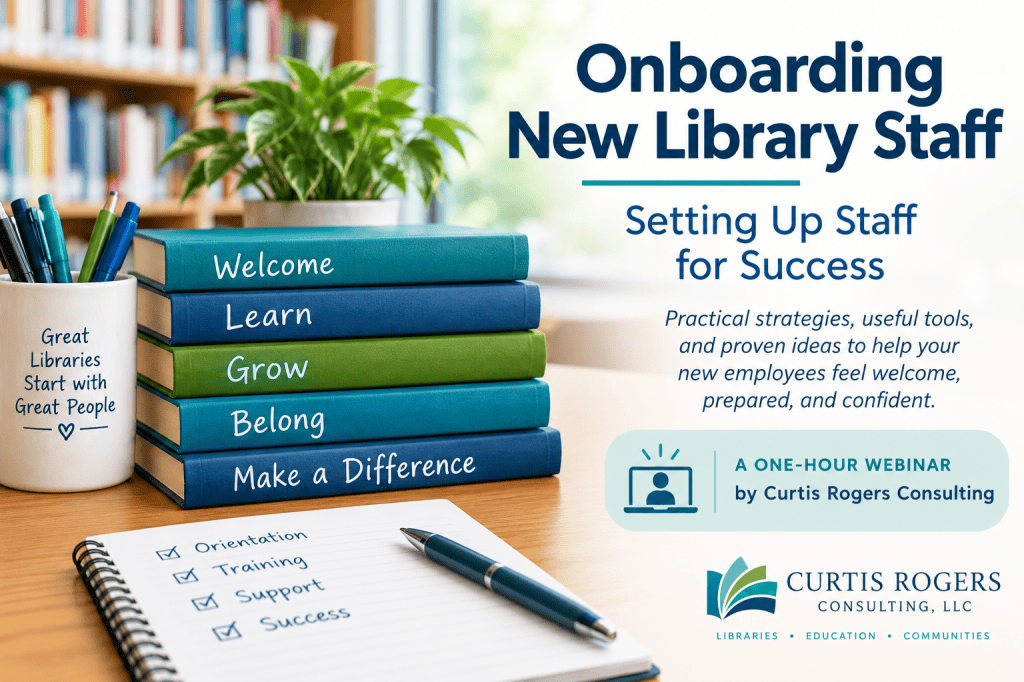
I offer a one-hour webinar, Onboarding New Library Employees: Setting Up Staff for Success, designed to help library professionals think more intentionally about welcoming, training, and supporting new staff members.
The webinar explores practical strategies for developing a more effective onboarding experience, including:
Collaborating with human resources and other staff members.
Establishing clear expectations and improving communication.
Helping new employees manage their time and responsibilities.
Using checklists, templates, and other onboarding resources.
Scheduling follow-up conversations and evaluating progress.
Creating an inclusive, engaging environment where new employees can succeed.
The goal is to provide practical ideas that libraries can adapt to their own staffing needs, organizational structures, and available resources.
Bring This Webinar to Your Library
I offer this webinar for libraries and library organizations interested in providing meaningful professional development for their staff. It can be a useful addition to a staff development day, continuing education program, regional library meeting, or other training opportunity.
Interested in hosting a live webinar for your library or library system? I’d love to hear from you! Contact me directly to discuss scheduling a session tailored to your organization’s needs.
You can reach me at curtisrogersconsulting@gmail.com or visit curtisrogersconsulting.com to learn more about my consulting and training services.
A successful onboarding experience doesn’t happen by accident. With thoughtful planning, clear communication, and ongoing support, libraries can help new employees feel welcome, prepared, and ready to contribute to the important work libraries do every day.


