
Communication is central to every successful library. Whether we are working with colleagues, supervising staff, serving patrons, collaborating with community partners, or communicating online, the way we communicate can have a tremendous impact on the quality of our relationships and our work.
But let’s face it: communication isn’t always easy.
Different personalities, communication preferences, work styles, and expectations can sometimes turn an ordinary conversation into a frustrating experience. A message that seems perfectly clear to one person may be interpreted very differently by another.
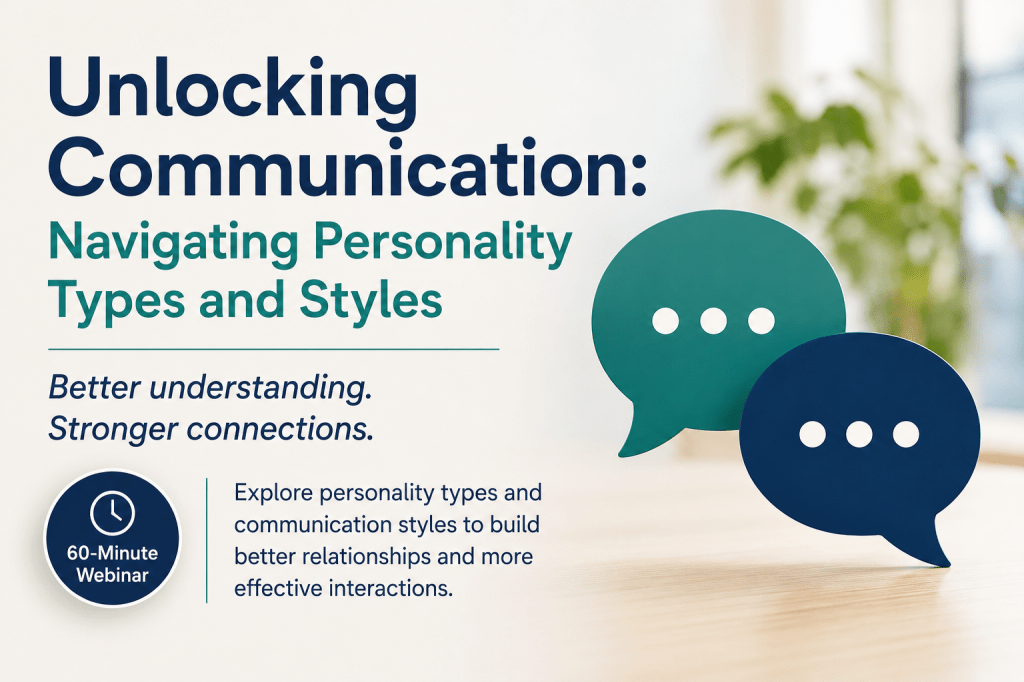
That’s why I developed my 60-minute webinar, “Unlocking Communication: Navigating Personality Types and Styles.”
Understanding the People Behind the Communication
One of the keys to becoming a better communicator is understanding that not everyone communicates the way we do.
Some people want to get straight to the point. Others prefer to talk things through. Some are highly detail-oriented, while others focus on the big picture. Some people are energized by conversation and collaboration, while others prefer time to think before responding.
None of these approaches is necessarily right or wrong—they’re simply different.
By learning more about personality types and communication styles, we can become more aware of our own communication habits while also learning how to adapt our approach when working with others.
Making Communication Less Scary
Whether you’re communicating face-to-face, in a staff meeting, by email, through Zoom, or on another online platform, a few simple skills and techniques can make a significant difference.
During this session, we’ll take a closer look at:
- Various personality types and communication styles
- How personality can influence the way we communicate
- Recognizing different communication preferences
- Strategies for adapting your communication style
- Ways to reduce misunderstandings and frustration
- Techniques for making workplace interactions more positive and productive
- Communicating effectively with colleagues both in person and online
The goal isn’t to put people into rigid categories or “label” our coworkers. Instead, it’s about developing greater awareness, flexibility, and empathy in our everyday interactions.
Communication Is a Two-Way Street
Good communication isn’t simply about getting our message across. It’s also about listening, observing, asking questions, and recognizing how our message may be received by someone else.
When we understand that people have different personalities and communication preferences, we can become more intentional about how we interact with them.
And that can lead to fewer misunderstandings, stronger working relationships, better teamwork, and—perhaps most importantly—a more positive workplace.
Designed for Library Staff
This webinar is especially useful for public, academic, and other library staff and leaders who want to strengthen their communication skills and create more effective working relationships.
The 60-minute session includes practical information, online resources that participants can explore after the webinar, and opportunities for Q&A and discussion.
You don’t need to be a communication expert. You simply need to be willing to look at communication from a different perspective.
Bring This Webinar to Your Library System
Would this topic be useful for your staff?
I offer “Unlocking Communication: Navigating Personality Types and Styles” to libraries and library organizations through state library associations, regional library groups, and individual library systems.
If you are interested in bringing this webinar to your state, regional, or local library system, I’d be happy to discuss your needs and how the session can fit into your professional-development program.
Contact me at:
curtisrogersconsulting@gmail.com
You can also visit curtisrogersconsulting.com to explore my other webinar offerings and professional-development topics for libraries.
Better communication starts with understanding—and understanding starts with being willing to see things from someone else’s perspective.


